Improving a Complex B2B Hotel Booking Experience
Optimizing workflows, pricing clarity, and decision-making for agents

Improving a Complex B2B Hotel Booking Experience
Optimizing workflows, pricing clarity, and decision-making for agents

Role

Product Design Consultant (Contract)

Scope

Hotel module
(Search → Checkout → Confirmation)

Duration

Live product improvement (not greenfield)

The platform is primarily used by travel agents to search, compare, and book hotels for their clients in time-sensitive scenarios, where speed and accuracy are critical.
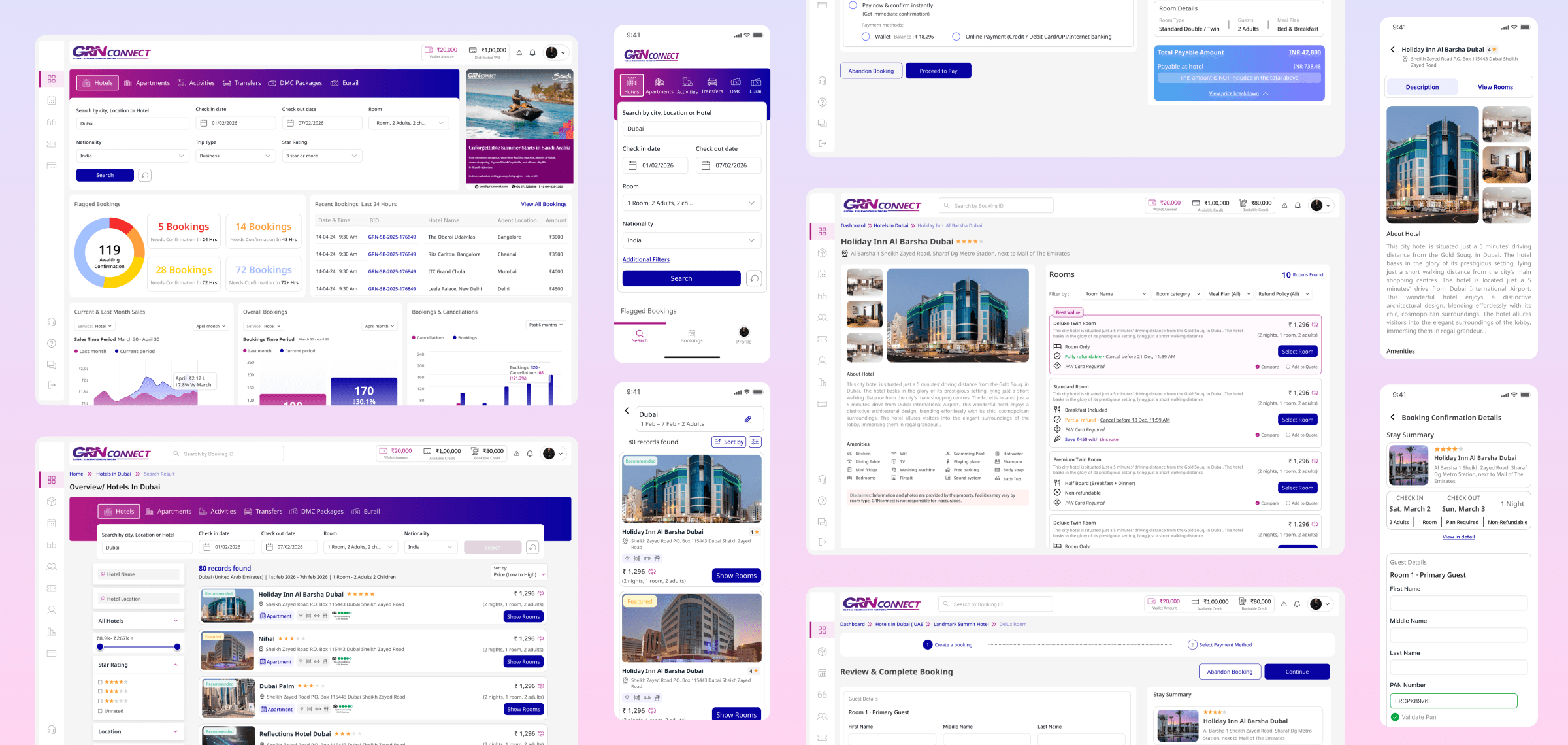
What needed improvement

What needed improvement

Over time, the hotel booking experience became increasingly complex as new features were added to the system.

While the platform supported a wide range of use cases, the core booking flow- searching, evaluating, and completing a booking was not optimized for speed and clarity.

  • Search lacked visibility and control, making it harder to track applied filters and context

  • Hotel options were difficult to scan and compare quickly

  • The experience followed a B2C-style structure, not aligned with agent workflows

  • Checkout lacked clear hierarchy, increasing cognitive load at the final step


As a result, agents had to spend more time navigating the system and verifying information instead of making quick, confident booking decisions.

Over time, the hotel booking experience became increasingly complex as new features were added to the system.

While the platform supported a wide range of use cases, the core booking flow- searching, evaluating, and completing a booking was not optimized for speed and clarity.

  • Search lacked visibility and control, making it harder to track applied filters and context

  • Hotel options were difficult to scan and compare quickly

  • The experience followed a B2C-style structure, not aligned with agent workflows

  • Checkout lacked clear hierarchy, increasing cognitive load at the final step


As a result, agents had to spend more time navigating the system and verifying information instead of making quick, confident booking decisions.

Problem statement 01

Problem statement 01

Lack of visibility and control during search

Lack of visibility and control during search

The search results experience lacked visibility and control, making it difficult for agents to track and refine their search effectively.


Key actions like applied filters and search context were not clearly visible, causing users to lose track of their inputs and rely on repeated checks while navigating through results.

Original Search Result screen
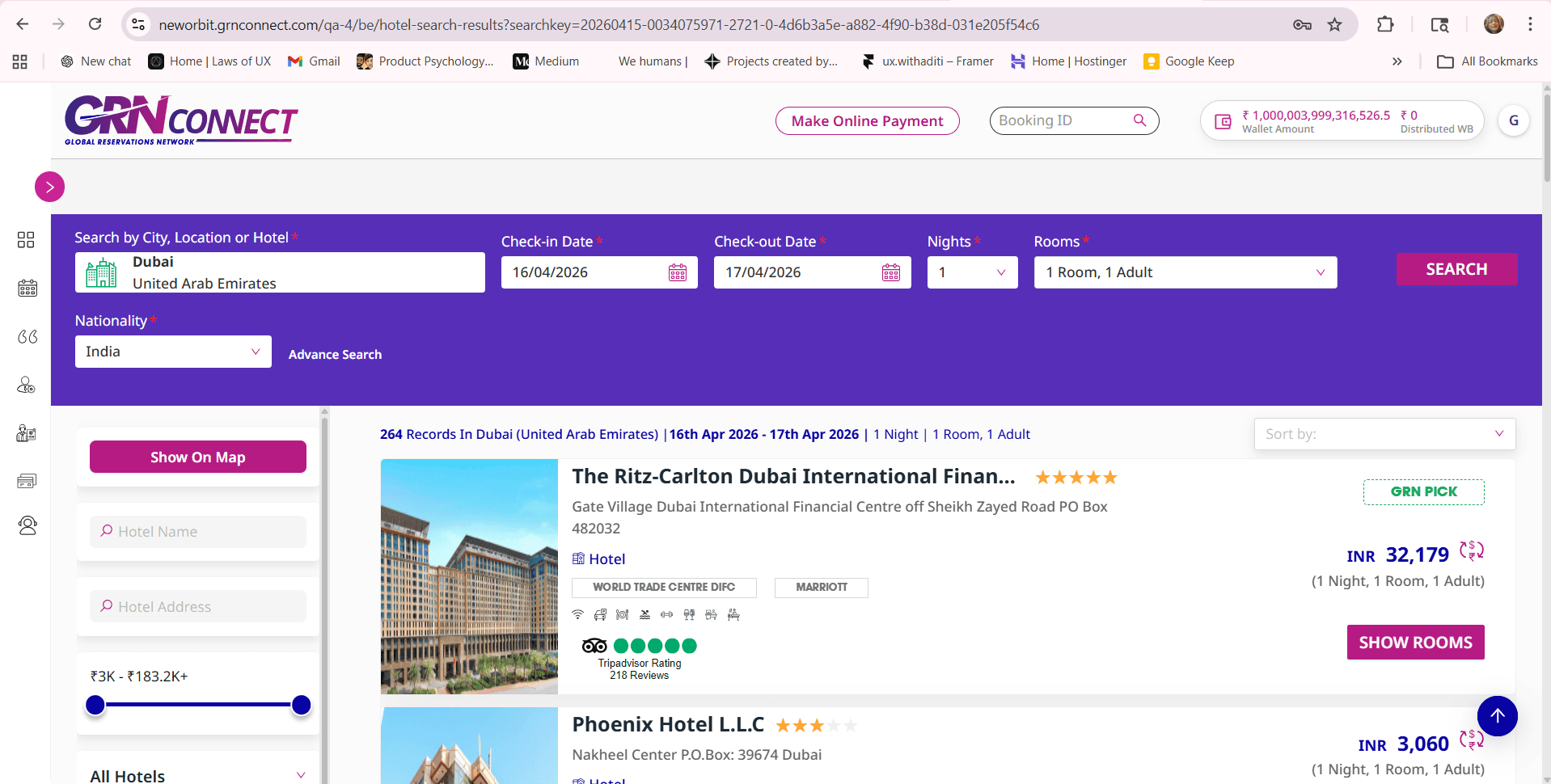
The existing search experience did not provide clear visibility of applied filters or search context.

Where the Experience Fails

Where the Experience Fails

01

Applied filters are not visible

Users cannot see or modify their active filters without reopening the panel

03

Navigation lacks clarity

No clear indication of where the user is within the search flow

02

Search context is not persistent

Users lose track of their search inputs while scrolling

04

No support for edge cases

Empty or low-result states do not guide users effectively

Revised SRP screen
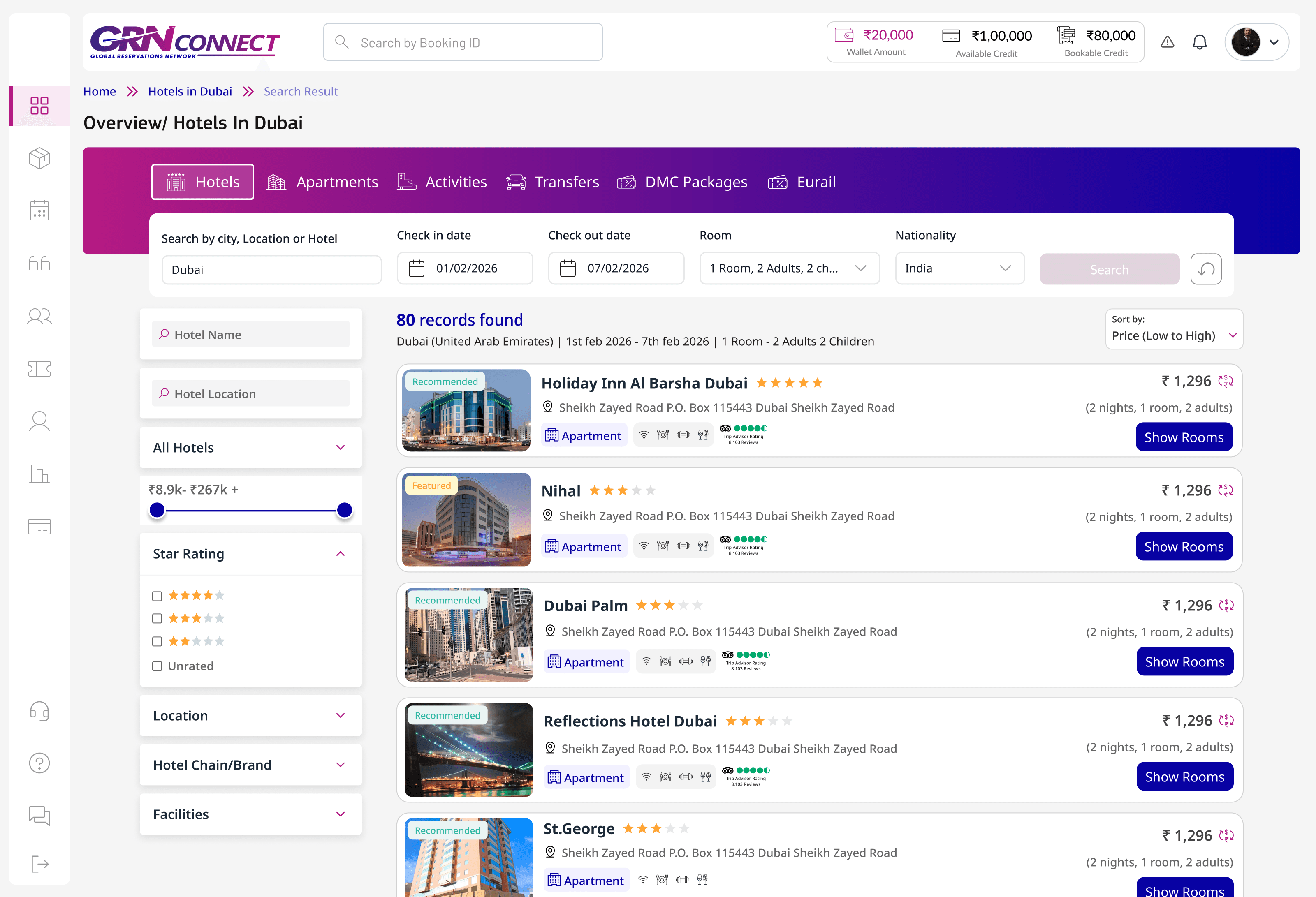
Instead of redesigning the search flow, the focus was on improving visibility and persistence of existing actions to reduce friction and cognitive load.

THIS is what actually matters

THIS is what actually matters

To improve usability, the search experience was redesigned to make key information persistent and visible throughout the interaction.

  • Introduced a sticky search bar to retain search context while navigating results.


  • Added breadcrumbs to provide clear navigation and orientation


  • Made applied filters visible and editable, allowing users to refine results without losing context


  • Designed edge case states (no results, low results) to guide users toward better outcomes

These changes ensure that users remain aware of their actions and can efficiently adjust their search without restarting the process.

These changes ensure that users remain aware of their actions and can efficiently adjust their search without restarting the process.

Problem statement 02

Problem statement 02

Inefficient evaluation of hotel options

Inefficient evaluation of hotel options

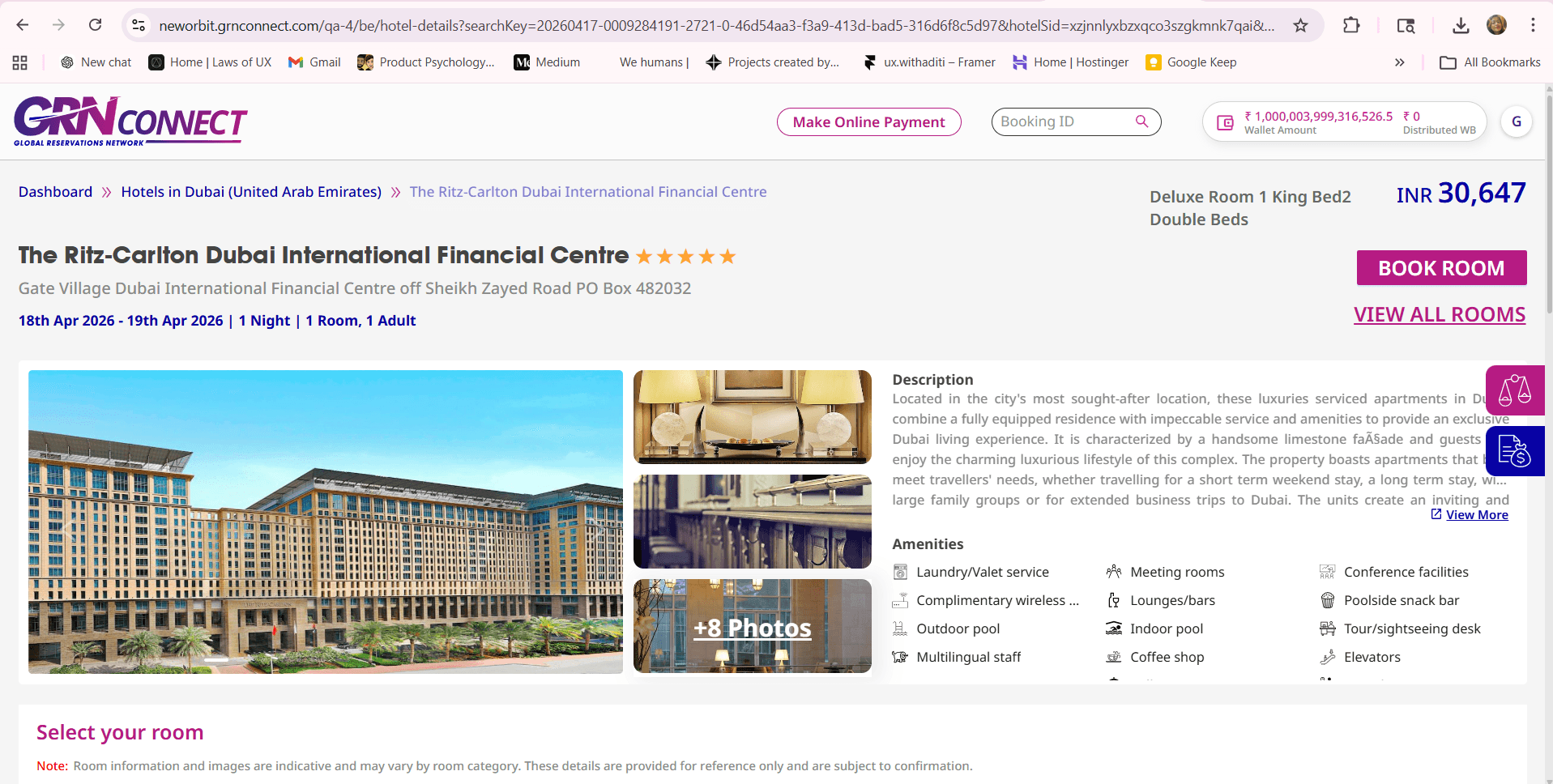
The hotel detail experience was not optimized for how agents evaluate and select hotels.


The layout prioritized descriptive content and visuals, while critical decision-making information such as room options, pricing, and availability required additional effort to access and compare.

The hotel detail experience was not optimized for how agents evaluate and select hotels.


The layout prioritized descriptive content and visuals, while critical decision-making information such as room options, pricing, and availability required additional effort to access and compare.

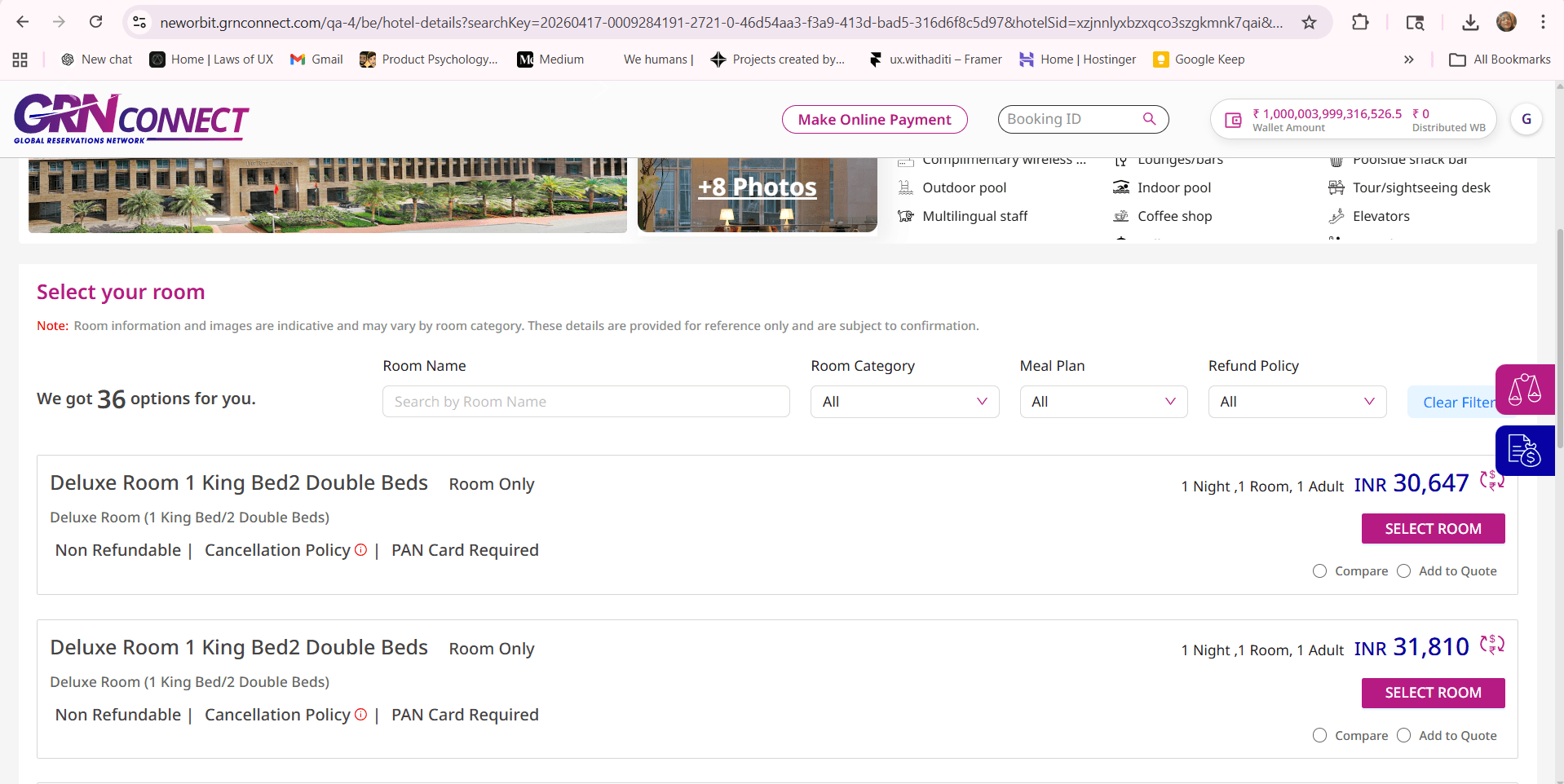
Original Hotel Detail screen

The existing layout followed a B2C-style structure, prioritizing content over decision-critical information.

Where the Experience Fails

Where the Experience Fails

01

Content-first layout

Hotel descriptions and visuals take priority over actionable data

02

Pricing and room options lack visibility

Users must scroll and scan to access key booking information

03

Not optimized for quick comparison

Information is not structured for fast decision-making

04

Mismatch with user intent

Designed for exploration, while agents require efficiency

Revised Hotel Detail screen

Instead of redesigning the search flow, the focus was on improving visibility and persistence of existing actions to reduce friction and cognitive load.

THIS is what actually matters

THIS is what actually matters

To better support agent workflows, the hotel detail experience was redesigned to prioritize decision-making over content consumption.

  • Introduced a split layout, separating contextual information from actionable booking data


  • Prioritized room options, pricing, and availability for quick scanning


  • Redesigned room cards to present structured and comparable information


  • Improved cancellation policy visibility to reduce uncertainty during decision-making

These changes allow agents to quickly evaluate options and move forward without unnecessary navigation or cognitive load.

Problem statement 03

Problem statement 03

High cognitive load during checkout

High cognitive load during checkout

The checkout experience lacked clear structure and hierarchy, making it difficult for agents to complete bookings efficiently.


Critical inputs, policies, and pricing information were presented without clear separation, forcing users to process too much information at once and increasing the chances of missed details or errors.

The checkout experience lacked clear structure and hierarchy, making it difficult for agents to complete bookings efficiently.


Critical inputs, policies, and pricing information were presented without clear separation, forcing users to process too much information at once and increasing the chances of missed details or errors.

Original Checkout screen

Key Usability Gaps

Key Usability Gaps

01

No clear hierarchy

Inputs and important information are visually mixed

02

Critical details are easy to miss

Policies and requirements are not clearly separated

03

Single-step flow increases cognitive load

Users must process everything at once before completing the booking

04

Payment is poorly structured

Final action is embedded within the same flow, reducing clarity and confidence

The existing checkout combined inputs, policies, and pricing in a single flow, making it difficult to scan and complete efficiently.

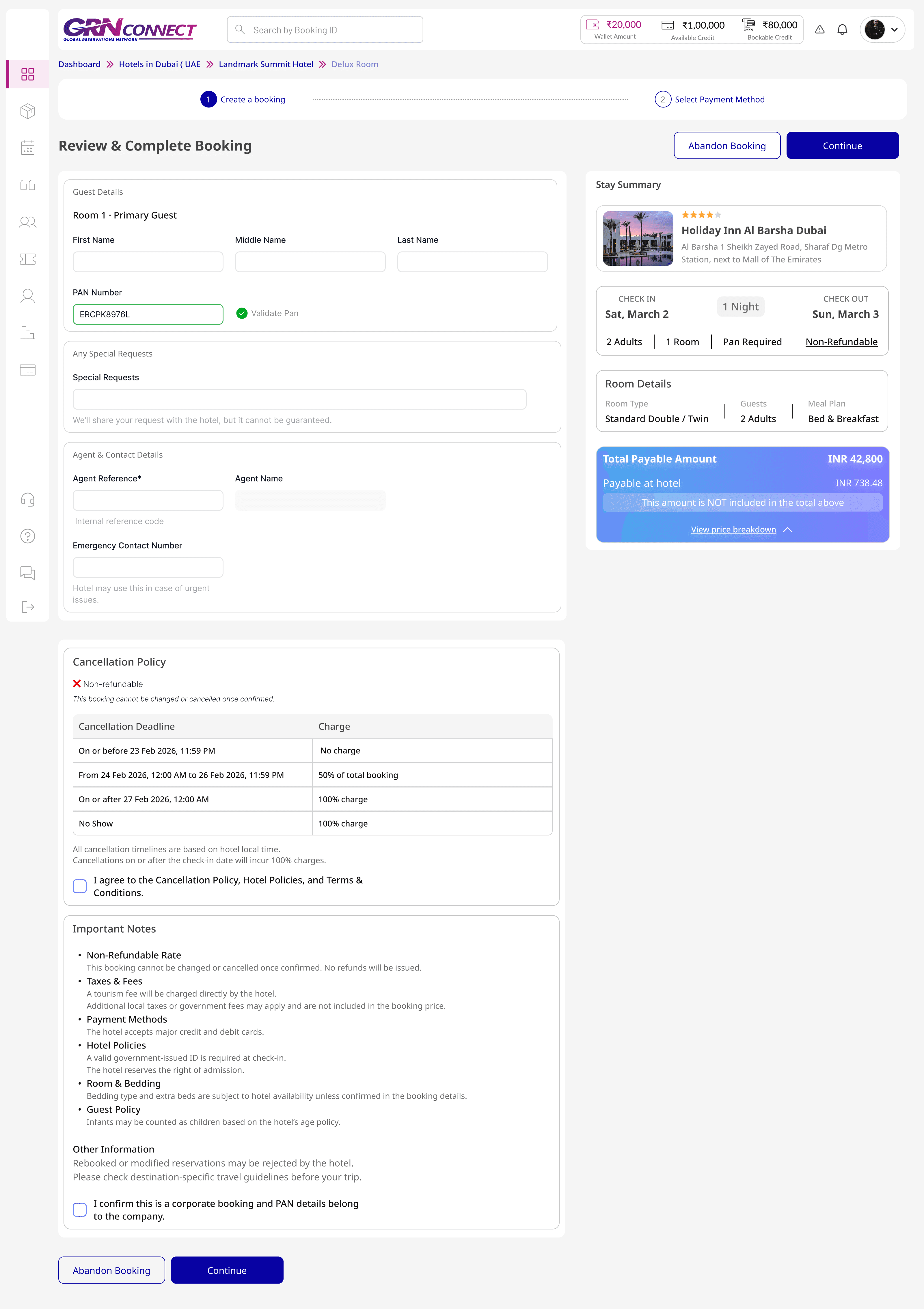
Revised checkout screen
THIS is what actually matters

THIS is what actually matters

The checkout experience was restructured to reduce cognitive load and improve clarity during the final stage of booking.

  • Introduced a two-step flow, separating information input from payment


  • Grouped related inputs to create a clear and scannable structure


  • Separated policies and important information to ensure visibility without disrupting the flow


  • Designed a persistent summary panel to keep pricing and booking details visible at all times


  • Refined pricing emphasis to be clear but not alarming, improving user confidence

These changes allow users to focus on one task at a time, reducing errors and enabling faster, more confident booking completion.

Separated input and decision-making into distinct steps to reduce cognitive load and improve task completion clarity.

Flow Impact

Flow Impact

Improved Booking Experience (End-to-End)

Improved Booking Experience (End-to-End)

Search

Results

Hotel Detail

Checkout

Confirmation

The improvements were designed not as isolated changes, but as part of a connected booking journey.


From refining search visibility to restructuring checkout, each decision was aimed at reducing friction and supporting faster, more confident decision-making across the entire flow.


This resulted in a more streamlined experience where users can:

  • Maintain context while searching and filtering

  • Quickly evaluate and compare hotel options

  • Complete bookings with greater clarity and confidence

The improvements were designed not as isolated changes, but as part of a connected booking journey.


From refining search visibility to restructuring checkout, each decision was aimed at reducing friction and supporting faster, more confident decision-making across the entire flow.


This resulted in a more streamlined experience where users can:

  • Maintain context while searching and filtering

  • Quickly evaluate and compare hotel options

  • Complete bookings with greater clarity and confidence

Key Learnings

  • Designing for existing systems requires balancing usability improvements with technical and business constraints

  • Simplifying workflows is less about removing information and more about structuring it effectively

  • Agent-driven platforms require speed and clarity over exploration and visual richness

Thanks for Watching

Thanks for Watching

Create a free website with Framer, the website builder loved by startups, designers and agencies.