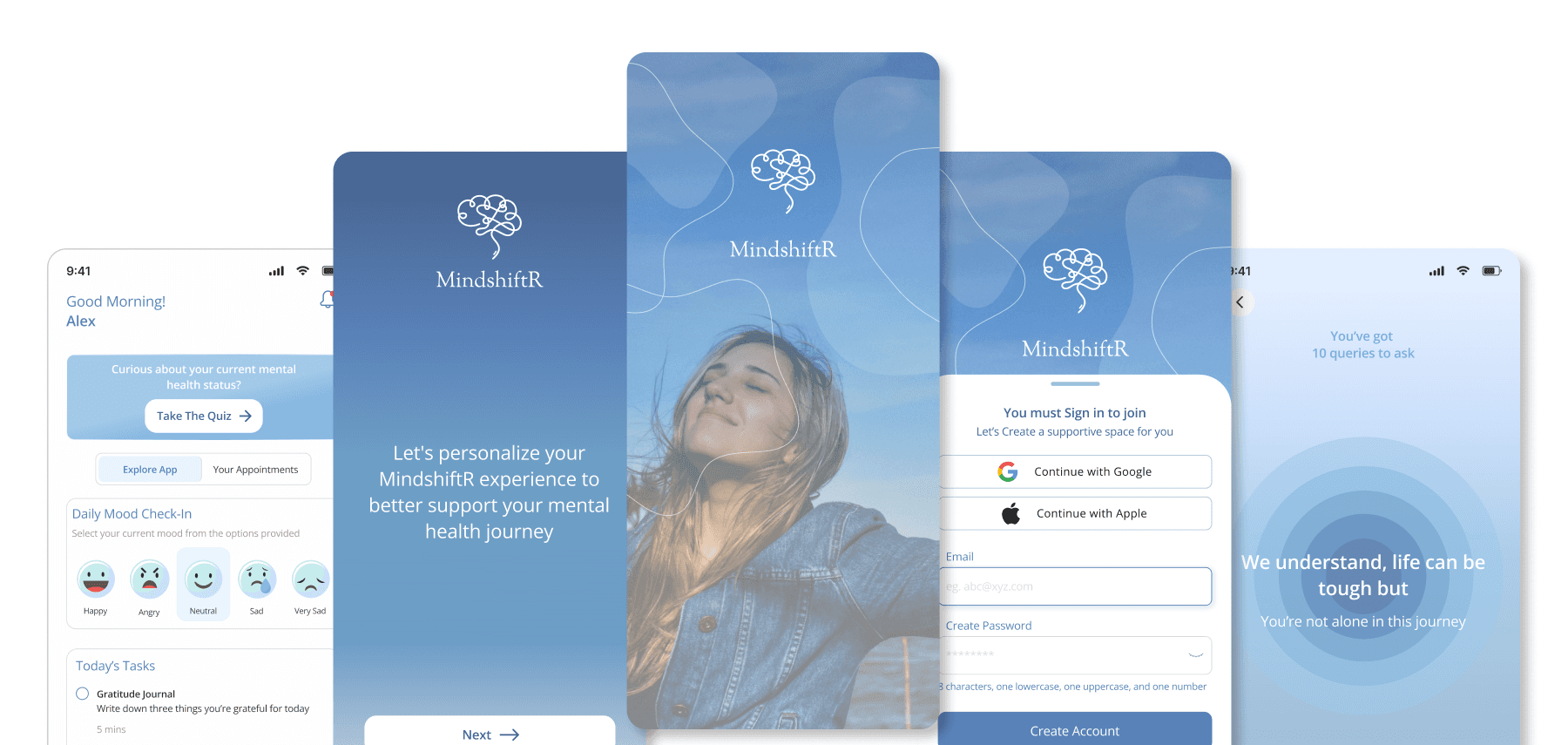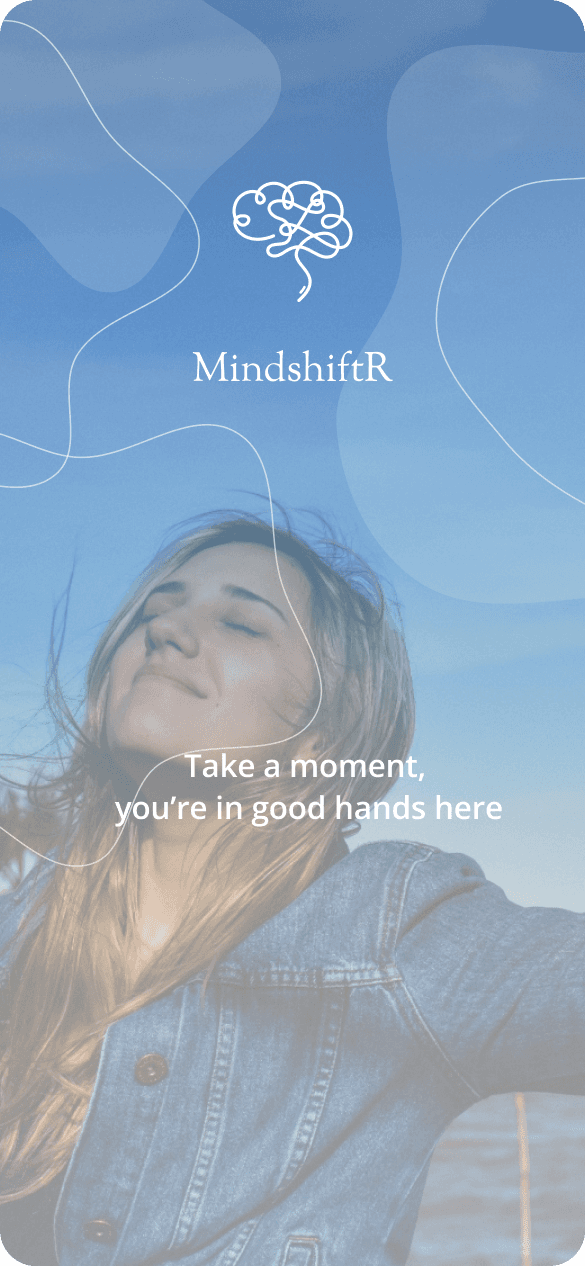
Designed “MindshiftR,” a mental-health platform for students and schools that blends PBCT-based micro-stories with real-time wellbeing tracking.

Designed “MindshiftR,” a mental-health platform for students and schools that blends PBCT-based micro-stories with real-time wellbeing tracking.

Role

End-to-end UX Designer

Scope

Consumer-first Student App + Optional School Dashboard Bundle

Consumer-first Student App + Optional School Dashboard Bundle

Duration

6-week concept sprint

01

Problem statement

By late 2023, student anxiety in India had surged—driven by exam stress, lingering pandemic effects, and social stigmayet schools still relied on paper logs and end-of-day check-ins. Counselors, overloaded with far more students than recommended, had no real-time data to spot at-risk teens early.

At the same time, students lacked a private, on-demand way to track their mood or dive into quick PBCT exercises. The result? Critical warning signs stayed hidden until problems turned into full-blown crises.

02

Understanding the Problem

We found students preferred a single tap to log their mood over formal sessions, craving privacy and speed.

Counselors, buried in spreadsheets, had no way to catch warning signs early. This clear gap drove our one-tap check-in with instant alerts solution.

“I wish I could just tap once and let someone know I’m not feeling great—calling the counselor feels so formal.”

– 16-year-old student, Delhi School #1

“We barely have time to update our spreadsheets at the end of the day. By then, it’s already too late.”

– Lead counselor, Delhi School #2
Key Insight: Students need a frictionless, private check-in. Counselors need real-time alerts—not end-of-day logs.

03

Research

Students: Current Behaviors & Barriers

What do we already know about students' mental health behaviors?

Students are more likely to open a mood-tracking app than speak up in person.

  • Peer stigma around therapy still exists in most Indian high schools.

  • Daily school routines are too packed for long, reflective interventions.

13,000+

students died by suicide in India in 2022, per NCRB

60%

of Delhi teens showed signs of depression, Times of India

26

student suicides in Kota in 2023 alone, The Wire

Design Implication: We needed something frictionless, private, and quick—more like a check-in, less like a session.

Counselors: Workflows, Gaps & Overload

What do we already know about school counselors’ mental-health workflows?

Manually manage 100–300+ students with no real-time system

  • Rely on delayed feedback via teachers or weekly check-ins

  • Burnout is high; administrative overload eats into counseling time

  • Many use spreadsheets and paper logs for tracking mood/behavior

  • Often find out after a crisis has escalated

300:1

Avg. student-to-counselor ratio in India vs. ideal 250:1 — ASER/UNESCO

80%

Counselors say administrative work eats into active student time — ASER reports

End-of-day logging

Most school counselors log mental-health observations after hours, not in real time

Design Implication: We needed a dashboard that surfaced at-risk students in real time, required no manual logging, and didn’t demand extra work from already overloaded counselors.

Why These Stopgap Solutions Just Don’t Cut It

Today, schools juggle student wellbeing using a patchwork of old-school methods: counselors scribble mood check-ins on paper forms, manually enter data into sprawling Excel sheets, and rely on end-of-week meetings to flag issues, by which point warning signs have often snowballed.

Students who feel anxious must summon the courage to book formal appointments (sometimes weeks out), or risk being lost in a sea of back-to-back classes and club activities. Meanwhile, admins field frantic calls from parents and shuffle crisis referrals via email, phone trees, or last-minute meetings. It’s reactive, time-consuming, and mentally exhausting for everyone involved.

Key pain points in today’s world:

Paper check-ins: Hand-written forms get lost or filled out half-heartedly.

  • Spreadsheet overload: Counselors spend more time wrestling Excel than talking to students.

  • Delayed response: Weekly debriefs mean real issues surface far too late.

  • Formal booking hurdles: Students must navigate clunky appointment systems or interrupt classes.

  • Crisis scramble: Administrators fire-fight via emails/WhatsApp threads when a student’s in distress.


Competitor Analysis

I always begin a project by conducting competitive analysis to understand what the competitors are doing and how I can differentiate my product or service. I identify their strengths and learns from them, while also looking for areas where I can improve and fill in the gaps in their offerings.
While other wellness apps offer long-form, adult-focused sessions, none address the need for short, stigma-free emotional tools for teens—especially in a school-based context. That’s the gap MindshiftR is built to fill.

Feature/App

Feature/App

Designed for Teens

Designed for Teens

Real time Mood check

Real time Mood check

PBCT- Micro Stories

PBCT- Micro Stories

Length of session

Length of session

School Integration

School Integration

Calm

10-20 min

Headspace

10+ min

InnerHour

8-12 min

Mindshiftr

<3 min

Who will use MindshiftR?

Who will use MindshiftR?

Students

Private, On-demand check-ins via Mobile app

Counselors

Real-time alerts and dashboard on desktops

Admins

High-level reports & user management on web portal

Which platforms?

Mobile app (iOS/Android): for students’ quick mood logs and PBCT stories

Web dashboard: for counselors and admins to view alerts, trends, and export reports

Scope of this case study:

I focused on the student mobile expereince and counselors dashboard Flows

Key pain-points

User Interviews

• Students avoid formal check-ins (“too clinical, too slow”).
• Fear of stigma keeps them from opening up.

Counselor Workshops

• End-of-day spreadsheets mean counselors only hear about crises.
• No way to flag at-risk students in real time.

Competitive Benchmark

• Headspace for Teams and Calm Schools lack real-time alerts.
• Neither offers bite-sized PBCT content, sessions feel too long.

Expert Heuristics

• Mood-scale UI was confusing (too many options).
• Feedback on interactions was too subtle, students weren’t sure selection “stuck.”

04

Ideation

What Made the Cut for V1—and Why

What Made the Cut for V1—and Why

With just 6 weeks to prove product viability, we had to be ruthlessly selective. Our V1 needed to be lightweight, intuitive, and actually usable without counselor training or onboarding.

One-tap mood check-ins:

Designed for speed, anonymity, and zero friction. Based on student feedback, we skipped daily journaling or form-based logs.

PBCT
micro-stories:

Each story was designed to take <3 min to complete, offering context-specific nudges (e.g., “what to do when you feel invisible in class”).

Screening-based onboarding:

Students skip login and start with a quick screening flow—allowing personalized support without collecting personal data.

24/7 Professional Support & Booking

Instant AI chat support, with seamless escalation to psychiatrists. In-app booking for local or online mental-health professionals

AI-Powered Virtual Assistant

Mindshiftr guides you through screenings, tasks, and check-ins. Provides personalized tips, reminders, and motivational messages

Key Features from the Counselor’s Perspective

Real-time counselor dashboard:

Counselors needed visibility, not more admin. We prioritized alert cards, trend summaries, and exportable data over full CRMs.

Flagged Risk Alerts:

Students showing repeated signs of distress are auto-flagged and prioritized for counselor review, reducing response delays.

Exportable Reports:

Downloadable mental health summaries for internal reviews or sharing with school admins—without breaching privacy.

05

Solution

Home screen

A calm starting point for everyday mental health.
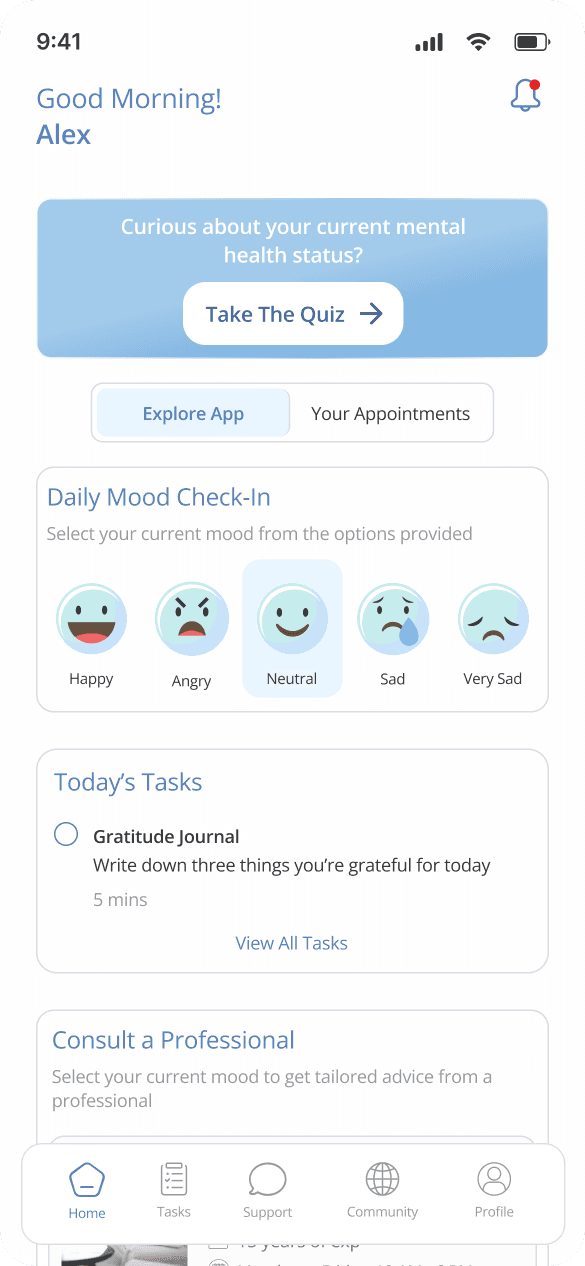
The home screen acts as a daily touchpoint—offering students a frictionless mood check-in, personalized task preview, and quick access to professional help. It balances light-touch interaction with deeper support options, gently nudging users to stay engaged without overwhelming them.

Home screen

A calm starting point for everyday mental health.
The home screen acts as a daily touchpoint—offering students a frictionless mood check-in, personalized task preview, and quick access to professional help. It balances light-touch interaction with deeper support options, gently nudging users to stay engaged without overwhelming them.

Tasks screen

Building emotional resilience through small, consistent actions.
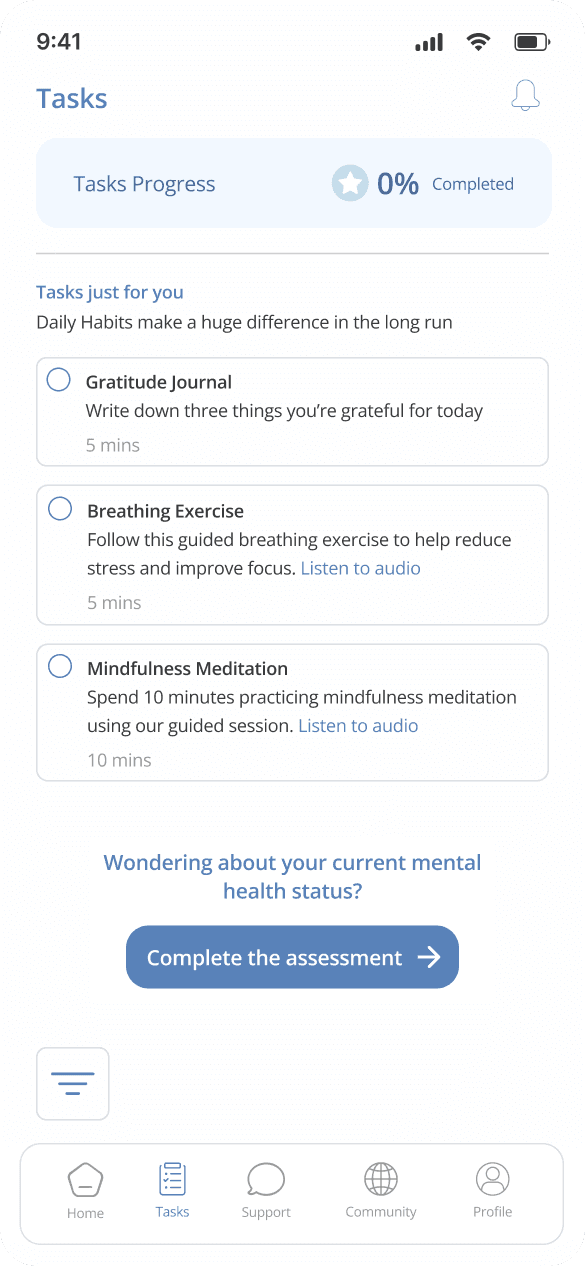
The tasks tab delivers a 7-day habit loop using simple, time-boxed activities like journaling, breathing exercises, and mindfulness. Each task is backed by PBCT and designed to take less than 10 minutes. The design avoids cognitive overload while tracking visible progress—reinforcing motivation through micro-success.

Tasks screen

Building emotional resilience through small, consistent actions.
The tasks tab delivers a 7-day habit loop using simple, time-boxed activities like journaling, breathing exercises, and mindfulness. Each task is backed by PBCT and designed to take less than 10 minutes. The design avoids cognitive overload while tracking visible progress—reinforcing motivation through micro-success.

Support (AI Chat Assistant)

Stigma-free support, anytime—without needing to “book a session.”
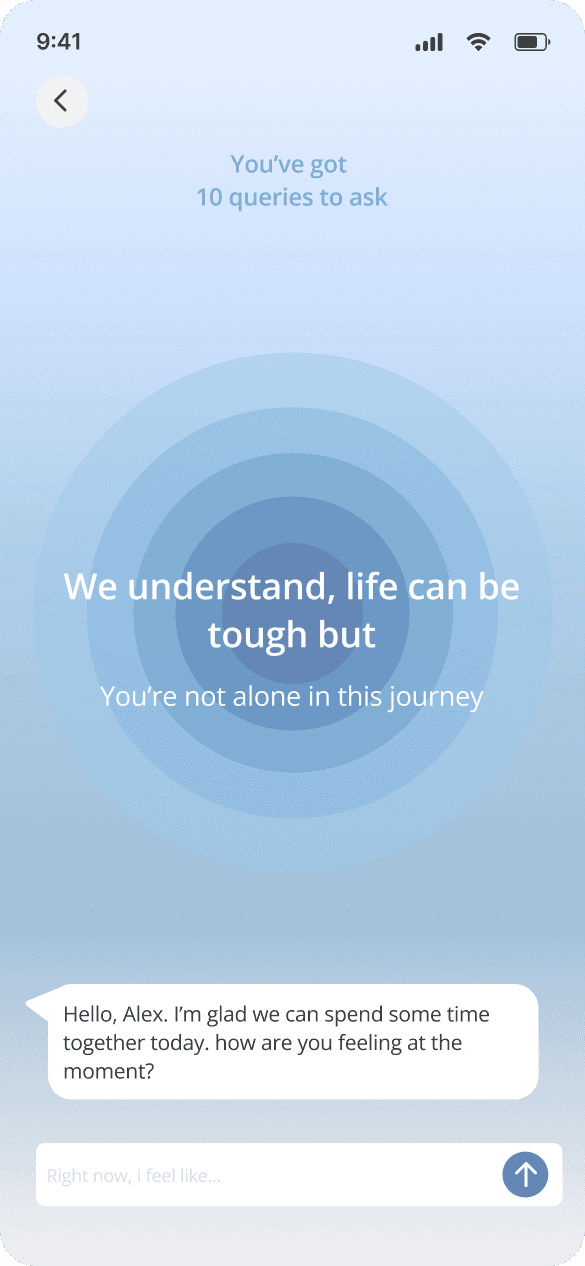
This screen introduces “Mindy,” our AI-powered chat assistant. It provides always-on support with 10 daily queries and personalized responses. The tone is conversational, non-judgmental, and safe—creating a soft entry point for students hesitant to speak to a human counselor.

Support (AI Chat Assistant)

Stigma-free support, anytime—without needing to “book a session.”
This screen introduces “Mindy,” our AI-powered chat assistant. It provides always-on support with 10 daily queries and personalized responses. The tone is conversational, non-judgmental, and safe—creating a soft entry point for students hesitant to speak to a human counselor.

Community

Mental wellness is stronger when shared.
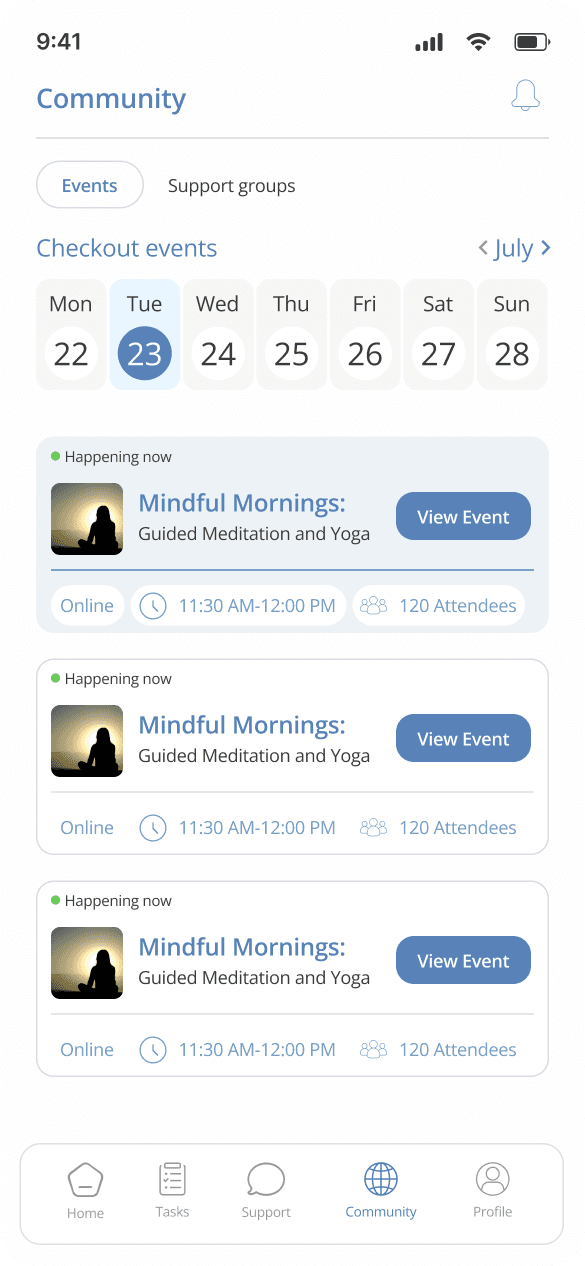
The community tab connects users to real-world events and support groups. Students can browse upcoming wellness activities (online/offline), RSVP instantly, and see how many peers are attending. It makes emotional growth feel social, not isolating—and encourages proactive engagement.

Community

Mental wellness is stronger when shared.
The community tab connects users to real-world events and support groups. Students can browse upcoming wellness activities (online/offline), RSVP instantly, and see how many peers are attending. It makes emotional growth feel social, not isolating—and encourages proactive engagement.

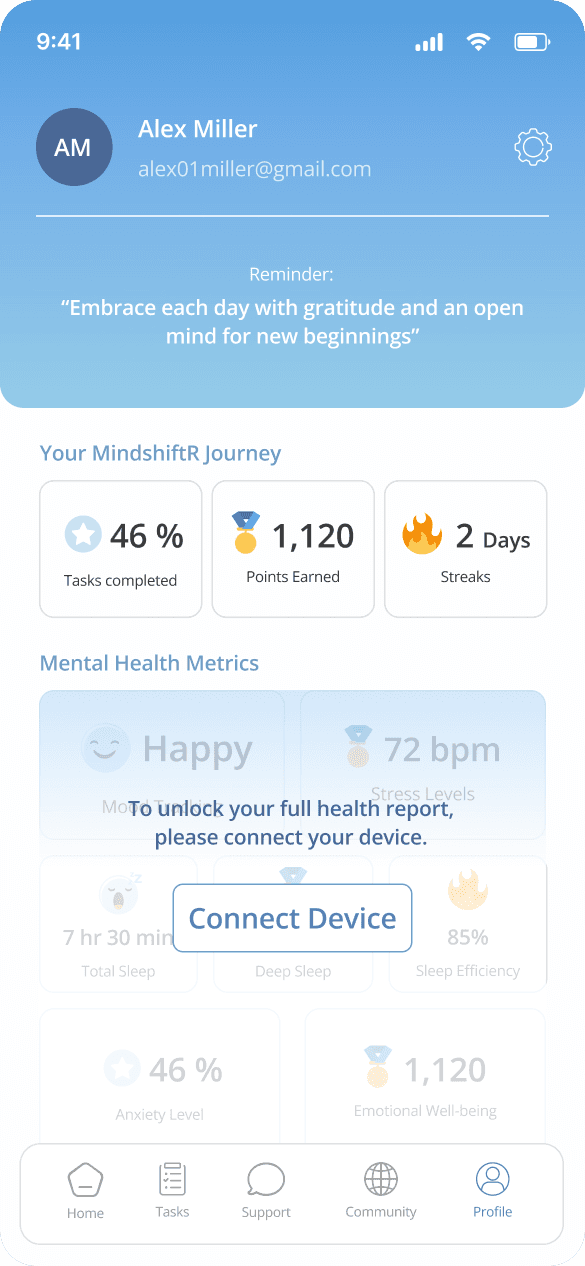
Profile

Your journey, visualized—at a glance.
The profile screen serves as a reflective dashboard, showing metrics like task completion, streaks, earned points, and emotional trends. Students can sync wearables for added biofeedback like sleep and heart rate. The tone remains non-clinical—just enough insight to encourage self-awareness without overwhelming.

Profile

Your journey, visualized—at a glance.
The profile screen serves as a reflective dashboard, showing metrics like task completion, streaks, earned points, and emotional trends. Students can sync wearables for added biofeedback like sleep and heart rate. The tone remains non-clinical—just enough insight to encourage self-awareness without overwhelming.

Designing MindshiftR wasn’t just about building features—it was about building trust in a space where stigma still runs deep. This project taught me how to translate emotional nuance into structured flows, and how even early concepts can spark real change when grounded in empathy, data, and bold design moves.

Thanks for Watching

Thanks for Watching

Create a free website with Framer, the website builder loved by startups, designers and agencies.